
Melmar Related Estates
The prominent families that are connected to Melmar owned many other estates throughout the United States
Wharton Estates
The Wharton's are Melmar's original owner Joanna Wharton Lippincott's paternal family
The Wharton and Lippincott families were united when Joanna married J Bertram Lippincott in 1885
Ontalauna Estate c1881-1925
Old York Road Germantown, Philadelphia, Pa
Joanna Wharton Lippincott's father
Joseph Wharton purchased a sixty-three-acre estate in the Branchtown section of Philadelphia, on Old York Road. Initially used as a summer home, he eventually built a French Second Empire-style mansion on the property which they named Ontalauna – which the family moved into in 1881. Joseph Wharton died at Ontalauna on January 11, 1909, and Anna Corbit Lovering Wharton died at Ontalauna in 1914


Deborah Wharton House c1790
336 Spruce St Philadelphia, Pa
Joanna Wharton Lippincott's grandparents
The Birthplace of Joseph Wharton
Deborah Fisher Wharton’s father Samuel Rowland Fisher purchased this house for her wedding gift in 1817, when she married William Wharton. She lived in this house for 70 years, including 30 years as a wife and mother, and 40 years as a widow. Nine of her 10 children were born in this home. Her son Joseph Wharton later purchased this house from his mother’s estate in 1888, and he owned it until his death in 1913. The house is now a rectory for Christ Church.
The Wharton's next-door neighbor at 338 Spruce St was US Congressman Joseph Hopkinson who was married to the daughter of first Governor of Pennsylvania Thomas Mifflin. Later in his career he was appointed as a US District Judge by President John Quincy Adams. He was the son of Francis Hopkinson, a signer of the Declaration of Independence, a member of the Continental Congress and the first United States District Judge for Pennsylvania.

Marbella Estate c1882
240 Highland Dr, Jamestown, RI
Joanna Wharton Lippincott's father
In 1882 Joseph Wharton, his brother Charles, and other friends purchased plots in Jamestown, Rhode Island, across the bay from Newport and built summer homes there. On his thirty acres, Wharton hired architect Charles Lovatt Bevins (1844-1925) to construct "Marbella", a large stone house with a prominent tower overlooking the entrance to Narragansett Bay. it was later inherited by his daughter Anna and her husband Harrison Smith Morris who called it "Horsehead" after a rock formation on the cliffs below that looked like the head of a horse from a certain angle.


Wharton Forest and Batsto Mansion c1784
150 square mile estate at 31 Batsto Rd. Hammonton, NJ
Joanna Wharton Lippincott's father
In 1873, Philadelphia industrialist Joseph Wharton began purchasing property and abandoned towns in the Pine Barrens, eventually acquiring about 150 square miles (~100,000 acres) which now is now known as Wharton State Forest, the largest state forest in the state of New Jersey. The 32-room Batsto mansion was built in 1784 and sits at the heart of Batsto Village now part of Wharton State Forest and served as the residence of generations of ironmasters. Joseph Wharton purchased Batsto Mansion and the property in the area surrounding Batsto in 1876. Wharton made improvements on the mansion and on many of the village buildings. He was also involved in a variety of forestry and agricultural endeavors. In 1954 New Jersey state purchased the property and now fourteen rooms of the Mansion, including the parlors, dining room, library and bedrooms, are currently open to the public for tours.


Joseph Wharton House c1743
119 Lombard St Philadelphia Pa
After they were married in 1854 Joseph and Anna Lovering Wharton lived in Philadelphia in a house that belonged to Joseph’s parents William Wharton and Debra Fischer Wharton.

Beavertail Farm c1904
601 Beavertail Rd Jamestown, Newport RI
Joanna Wharton Lippincott's father
Period shingle-and-stone-style home with matching carriage house built by Joseph Wharton in 1904 that sits on over 2. 5 lush acres of pure serenity with deeded access to the mouth of Narragansett Bay. The residence lends itself to casual living & gracious entertaining. Enjoy natural vistas from the grandiose wraparound porch. Custom features include double-sided fireplaces & magnificent staircase with custom-made banister. Appreciate the sophisticated gallery lighting for showcasing artwork throughout the home. 2 impressive kitchens: one is the chef’s gourmet kitchen with 42 sq. ft. marble island & state-of-the-art appliances, and the second is an epicurean’s dream prep kitchen with brick pizza oven. Additional new mahogany porch off the kitchen features custom Lynx Pro Sear barbecue & custom retractable awning for seasonal entertaining. The south wing’s master suite encompasses two rooms, grand walk-in closet & sumptuous spa bath. In addition, there are 3 bedrooms in the north wing & 2 bedrooms on the third floor. All new heating, central air & mechanicals as well as whole house generator. The carriage house’s traditional exterior conceals a jewel box inside, with luxurious multi-room guest suite with balcony, 2-car garage, workshop & wine storage. Located 3 miles to Jamestown village

Clingstone c1905
Offshore Island at 46 Dumpling Dr reachable only by boat
Joanna Wharton Lippincott's 1st cousin
J.S. Lovering Wharton, Joanna Wharton Lippincott's 1st cousin designed Clingstone with artist William Trost Richards. It was completed in 1905 atop a small rocky island in an island group called “The Dumplings”. The name “Clingstone” was suggested by a remark that “it was a peach of a house”.
Clingstone was designed to take advantage of its island location with picture windows and 23 rooms on three stories radiating off a large central hall. It was built with wide planking, sturdy oak beams, diagonal sheathing, exterior shingles and, in an attempt to address the unique environmental hazards of its location, an interior cladding of shingles also. The Whartons spent every summer at Clingstone until Mr. Wharton’s death just before the hurricane of 1938, which the house survived with little damage. After Mrs. Wharton’s death in 1941, the house stood empty until 1961.
Henry Austin Wood III, a distant cousin of J.S.L. Wharton and a noted Boston architect, purchased Clingstone in 1961. By that time, all of Clingstone’s 65 windows had been smashed and its slate roof was wide open to the sky. Until his death in 2017, Mr. Wood devoted his life to the restoration of Clingstone, keeping it intact and standing, through his own hard labor and that of others

Bellevue Estate c1802-1895
Between 27th and 28th Streets, just north of Allegheny Ave
Joanna Wharton Lippincott's paternal great grandfathers' country seat
Bellevue was purchased by Joanna Wharton Lippincott's great grandfather Charles Wharton (1743–1838) in 1802. Joanna's grandparents William Wharton and Deborah Fischer Wharton received a gift of the Bellevue estate from his father Charles Wharton in 1834. Bellevue was a working farm of 106 acres near The Cliffs estate that Deborah had grown up to love. The Whartons and their children spent many summers at Bellevue until 1895 when the City of Philadelphia condemned the Bellevue Estate for the "Cambria Reservoir"

The Cliffs c1753-1986
East Fairmount Park near 33rd Street, Philadelphia
Joanna Wharton Lippincott's maternal family's original county seat
The Cliffs was built in 1753 by Joshua Fisher (1707–1783), the great-great-grandfather of Joseph Wharton. It is a country house in the Georgian style, constructed in stone, with two stories and a basement, originally heated by double fireplaces on both floors and basement. The estate surrounding the house included a farm. The house was the location where Benjamin Franklin's daughter, Sarah Franklin Bache, and her sewing group made clothing for the Continental soldiers during the Revolutionary War. The Cliffs burned down in 1986.
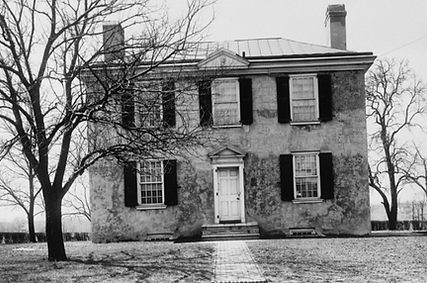
Walnut Grove Estate c1735-1862
5th & Washington Street Philadelphia, Pa
Joanna Wharton Lippincott's paternal family's original country seat
Deemed the finest of its day near Philadelphia, Joseph Wharton's (1707-1776) country home "Walnut Grove" was near the Delaware River below Philadelphia, located at what is today Fifth Street and Washington Avenue. This house was the scene of the famous 'Meschianza,' a grand fête given during the Revolution (May, 1778) by the British officers in honor of their General, Lord Howe.
The house was demolished in 1862, replaced by the "Wharton School House".

The Mount c1902
2 Plunkett Street Lenox, Massachusetts
Joanna Wharton Lippincott's 2nd cousin once removed
The Mount is a turn-of-the-century home, designed and built in 1902 by American writer and designer Edith Newbold Wharton (1862-1937). In 1921, she became the first woman to win the Pulitzer Prize for Fiction for her 1920 novel The Age of Innocence which Martin Scorsese made into a movie in 1993. Now a National Historic Landmark, The Mount is a cultural center that celebrates the intellectual, artistic and humanitarian legacy of Edith Wharton.

Lippincott Estates
The Lippincott's are Melmar's original owner J. Bertram Lippincott's paternal family
The Wharton and Lippincott families were united when Bertram married Joanna Wharton in 1885
Oak Hill Mansion c1805-1910
Old York & Wyoming Ave, Germantown, Pa
The Columns at Melmar were relocated from Oak Hill. Oak Hill was the country seat of Melmar's first owners Joshua Bertram Lippincott and Joanna Wharton Lippincott from 1881 - 1910. Joanna Lippincott's parents Joseph Wharton and Anna Lovering were married at Oak Hill in 1858. Oak Hill was built in the early 19th century for Seth Craige, Melmar's original owner Joshua Bertram Lippincott great great grandfather, who lived there from 1805 until his death in 1831. Craige was the founder of the largest cotton mill in the country at the time. His mill was originally a flour mill owned by William Penn know as Governors Mill. Oak Hill was also subsequently owned by Melmar's other original owner Joanna Lippincott's grandfather Joseph Samuel Lovering, founder of J.S. Lovering & Co one of the world's largest sugar refineries at the time, owned Oak Hill from 1837 until he died there in 1881. Joanna Lippincott's grandmother Ann Corbit Lovering also died at Oak Hill in 1875.

Lippincott Mansion (aka Thaw House) c1880
1710-1712 Spruce St Philadelphia, Pa
The 14,000-square-foot downtown Philadelphia mansion was built as the primary residence of Melmar's original owners, Joshua Bertram Lippincott and Joanna Wharton Lippincott's who lived here from 1880 until Joshua Bertram Lippincott died here in 1940. Melmar's second owners, Nicholas Biddle & Sarah Wharton Lippincott Biddle were married here in 1915. After J Bertram Lippincott's death, the estate was sold in 1940 to Harry K. Thaw, whose murder of renowned architect Stanford White in 1906 led to the “Trial of the Century”. The mansion is now zoned as a commercial property and occupied by a law firm.


Meeresblick c1892
177 Beavertail Rd., Jamestown, RI
Built by architects Pritchett & Pritchett as the summer home of Melmar's original owners, Joshua Bertram Lippincott and Joanna Wharton Lippincott, the Shingle-style seaside villa overlooking Narragansett Bay, "Meeresblick" (German for "sea view") united the Lippincott publishing dynasty with the Wharton industrial family in Jamestown. The 4,000+ sq ft home features expansive verandas, fieldstone foundations, and panoramic ocean views on 10+ acres (part of the family's larger land holdings on the peninsula). The property remains in Lippincott family hands (e.g., Bertram Lippincott III associated via public records), with parts sold for development in the 1980s

Lippincott House c1926
216 Highland Dr, Jamestown, RI
A 1926 Colonial Revival home designed by architect Albert Harkness, this example in stone has a two-story “living hall” with exposed gable truss construction overhead. A bedroom and service wing projecting on either side make a protected garden court facing the sea. Harkness's second wife Hope owned just such a Provençal house in Middletown designed by another architect using the same formula but different massing. Here Harkness seems to have adapted his own vacation premises into another charming seaside cottage, where the combination of style and scheme readily adapt the house from summery escape to the formal occasion. Smaller than Meeresblick but nearby, this house was used for summer stays. Family ownership continued post-1940

Alscot c1899
323 Fishers Rd, Bryn Mawr, PA
J Bertram Lippincott's brother
Walter Lippincott’s (1849-1927) Alscot mansion was built on his 22 acre Main Line estate that housed 16 addition building including a 10,000 sq ft guest house named "The Annex" (still standing), a cluster of dog kennels, garage, stable, carriage house, tool house, duck house, two hen houses, a greenhouse, a laundry/workshop, a power house (used for heating the main house, still standing), Colony Cottage (still standing), and Hillside Cottage (where foreman Hatton lived), Sunnyside Cottage and Haven Cottage (both still standing). Unfortunately, the main Alscot mansion was demolished and no longer exists.

Biddle Estates
The Biddle's are Melmar's second owner Nicholas Biddle's paternal family
The Biddle and Drexel families, united with the Lippincott and Wharton families when Nicholas married Sarah Wharton Lippincott in 1915
Mount Hope Plantation c1684
42,916 acres near Bordentown, NJ
The original Biddle Family Estate

English immigrants William Biddle I (1630–1712) and Sarah Kempe (1634–1709), arrived in the Province of New Jersey in 1681. Quakers, they had emigrated from England in part to escape religious persecution. Having acquired extensive rights to more than 43,000 acres of lands in West Jersey, they settled first at Burlington, a city which developed along the east side of the Delaware River. Here, on a 500-acre tract, the Biddle's built Mount Hope (aka Kinkora) around 1684, which was the site of the first Quaker meeting in Burlington County. William Biddle III (1697-1756), a Quaker, was born in London and had been imprisoned in England for his religious beliefs. The son of William Biddle II and Lydia Wardell Newbold and Grandson of William Biddle I (1630-1712) and Sarah Kempe Biddle, the founders of the Biddle family in America. William and his brother John Biddle (1707–1789), two third-generation brothers, moved from Mount Hope, to Philadelphia, Pennsylvania in the 1720s and 1730s. They constituted the first generation of the Philadelphia Biddle family, which became involved in the business, political and cultural life of Pennsylvania and the United States.
Biddle Island c1680's
40.12844°N, 74.75822°W on the Delaware River
Part of the original Biddle Family Estate
In the 1680's William Biddle I (1630–1712) won rights from William Penn for a 278-acre island in the Delaware River, is located about six miles north of Burlington, New Jersey, directly opposite the hamlet of Kinkora in Mansfield Township, Burlington County "lying between William Penns great manor of Pennsbury on the north bank of the river and William Biddle's estate on the south bank, was claimed as part of the former, but was finally awarded to Biddle." Upon moving to the city in the 1720's, William Biddle III (1697-1756), sold Biddle Island to his father-in-law Michael Newbold who then renamed the island Newbold Island.

ex Mount Hope Plantaion / Kinkora
ex Biddle Island
Andalusia (aka The Biddle Mansion) c1797
1237 State Rd, Andalusia, PA
The Philadelphia Biddle Country Seat

The 225-acre Andalusia Estate was originally a country seat, composing of a main house, outbuildings and a farm. There were various kinds of outbuildings as well as other kinds of structures including a recreational house (the Billiard Room); a playhouse, a bathing house; a laundry house; a milk house; a grotto; a gardener's house; a farmer's house; a laborer's house; a barn; a shad fishery; a steam engine house; the graperies and several ice houses. The main house, known as the "Big House", is regarded as "One of the finest Greek Revival Homes in America" with the Greek Revival portico modeled after the Hephaesteum in Athens. John Craig (1754-1807), who established Andalusia was the son of Scottish immigrants who had settled in Philadelphia. He grew wealthy by shipping goods overseas to and from the United States and throughout the Caribbean. In 1795, he and his wife, Margaret, purchased 100 acres of land along the Delaware River in Bucks County and Andalusia was completed in 1797. In 1806 architect Benjamin Henry Latrobe added side bays and small wings to the "Big House", completed in 1808. In 1811, the Craigs’ only daughter, Jane, married Nicholas Biddle (1786-1844) —then a lawyer, editor, and state legislator. When Margaret Craig died in 1814, Nicholas Biddle acquired the property from her executors and expanded Andalusia to the property it is today. In 1980, James Biddle (1929-2005) made the decision to divide Andalusia and give away the Big House and nearly 15 acres of land to the Andalusia Foundation. Today the Foundation comprises 50 acres of gardens and woodlands, the Big House, the Grotto, and other outbuildings throughout the property and is open to the public for tours and special events.
The Nicholas Biddle Mansion c1821
Nicholas Biddle's great grandfather's city home


The Million Dollar Punch Estate
3915 Locust St Philadelphia, Pa
Nicholas Biddle's childhood home
Nicholas Biddle's father Edward Biddle II's first wife Emilie Drexel was the daughter of the founder of Drexel, Morgan & Co (the predecessor to what is now JPMorganChase) as well as the founder of Drexel University - AJ "Tony" Drexel - who gifted Edward and Emilie 3915 Locust St as a wedding present in 1872 in addition to $150,000 (~$5M adjusted for inflation) interest in Tony's Drexel & Co. Edward worked for Tony at Drexel & Co until 1878 when one day a junior clerk bumped into Edward within the narrow confines of the bank’s vault. “Look where you’re going, you clumsy ox,” the clerk muttered. Edward, who prided himself on his boxing skills, promptly knocked the clerk down and strode, unruffled, back to his desk, leaving others to pick up their dazed colleague. Later that day, Edward went to see Tony in his office. “Are you here to give me a report of the incident, Edward?” Tony asked. “I have no report to make,” Edward replied unapologetically. “The man offended me and I knocked him down. I think now it is a question of his going or my going.” Tony replied, “Edward, I think you had better leave...” Upon his exit from his father in law's company Edward went to law school and became a lawyer. When Edward's first wife Emilie died at the young age of 31 in 1883, Tony sat Edward down and informed him, “If my daughter hadn’t died, you would probably have had seven million dollars (~$225M adjusted for inflation!). But she did die, and I know you’re too much of a gentleman to expect anything further.” As they had a strained relationship, Edward reluctantly agreed that he would have no part of the Drexel fortune. “You are still young and will probably marry again,” Tony told him. “But with three boys, it will be difficult for you and difficult for them.” Your oldest son, Anthony is eight, old enough to know you and love you,” Tony reasoned. Livingston and Craig, on the other hand, were only five and three. “Let them come to live with me,” Tony suggested. Tony promised to create three trusts of $1 million (~$32M adjusted for inflation) each that would generate income for Edward’s three sons when they reached the age of 21. But since the Drexels’ allowance to Emilie had stopped with her death, Edward found himself with no income - although Tony did purchase back the $150,000 interest in Drexel & Co from Edward. Small wonder that, within the Biddle family, the blow that Edward had so impulsively administered to his fellow clerk subsequently became known as the “million-dollar punch”! Although their house technically belonged to Emilie’s estate —a precaution Tony had taken precisely to guard against a gold-digging son-in-law- Edward did retain a life interest in the home so he could continue to live in it but he could not sell it.... In 1889 Edward married his second wife Lilian, daughter of John Rose Lee, and they had three additional children (Edward had six total children). Melmar's Nicholas Biddle was born in 1893 at his maternal grandparent's home at 207 Mountfort St in Brookline, Massachusetts, with 3915 Locust St becoming his childhood home where he would live until his marriage in 1915. Edward Biddle lived there until he died in 1933.
Springhead
Old York Road and Susquehanna Road, Abington Pa
Nicholas & Sarah Biddle and family first home


Excerpts from Nicholas Biddle's Personal Memoirs - 1975
When Nicholas Biddle married Sarah Wharton Lippincott in 1915, they moved to "Springhead", a six-acre estate on Old York Road in Jenkintown, Pennsylvania directly across from the original site of the Huntingdon Valley Country Club before the club relocated 1n 1928 to its current location at 2295 Country Club Drive, Huntingdon Valley, PA. The Biddle's lived at Springhead for 25 years until they moved to Melmar upon Sarah's father's death in 1940. The estate was gradually sold and redeveloped over time into a modern residential neighborhood. Today almost nothing physical remains of Springhead except some old stone walls and the natural spring that gave the property its name, now hidden in the woods behind modern homes on Old York Road across from where the original Huntingdon Valley Country Club course once lay.
Gulls Nest c1928
201 Beavertail Rd, Jamestown, Newport, RI
Nicholas & Sarah Biddle and family summer home


Excerpts from Nicholas Biddle's Personal Memoirs - 1975
Laurento (aka "The Willows") c1901-1980
Wayne, Pa
Nicholas Biddle's brother - Craig Biddle
The lavishly decorated Italian-Renaissance styled 'Laurento' with 113 acres landscaped by the Olmsted Brothers, was a wedding gift to Nicholas Biddle's brother, Craig Biddle, from his Drexel guardian that stood atop a bluff overlooking Little Darby Creek from 1901 until the early 1980's. Designed by Peabody & Stearns, 'Laurento' was the home of Drexel grandchild, sportsman Craig Biddle, and his wife, the former Laura Whelan. Following the death of their mother in 1883, four-year old Craig Biddle and his brother Livingston were raised as wards of George W. Childs Drexel. Under the terms of Anthony J. Drexel's will, each of the Biddle brothers would receive a million dollars (equivalent to ~$35M today) upon reaching age 21. Unfortunately, due to a fallout between Nicholas's father Edward Biddle III and Mr Drexel, Nicholas was not included in this arrangement and neither he nor his father became heirs to the Drexel fortune. The mansion was demolished in the 1980's and is now a public park in Villanova, Pennsylvania, is known today as The Willows.

Westview c1919
21 Shannon CIRCLE, Bryn Mawr, PA
Nicholas Biddle's brother - Livingston Ludlow Biddle
Livingston Ludlow Biddle (1879-1959) and his brother Craig were raised as wards of George W. Childs Drexel after Nicholas's father divorced Emilie Drexel. Westview was a wedding gift to Livingston and his wife from the George Drexel family.

Biddle Mansion (fka Linden Court) c1895
49 E Sunnyside Lane, Tarrytown, NY
Nicholas Biddle's nephew - AJ Biddle, Jr
William R. Harris, co-founder of the American Tobacco Company, bought the estate named Grey Court in 1895, and resold it in the same year to his partner James B. Duke's daughter Mary, who renamed it Linden Court. The mansion was later renamed the "Biddle Mansion" after she married Anthony Drexel Biddle, Jr in 1915. After Mary's death in 1960, her children sold the mansion to the government of the Republic of Mali, which used the estate briefly as a diplomatic retreat center. In 1964, former Time and Harper's magazine writer and editor Robert Schwartz bought the combined estate (including both Biddle Mansion and the adjacent King Mansion) for $500,000 and renamed it the Tarrytown House Conference Center, the nation’s first corporate conference center which is still operational today.

Binderton c1906
455 W. Chestnut Hill Ave. Philadelphia, Pa
Nicholas Biddle's cousin - J. Wilmer Biddle
Named "Binderton" by its first owner J. Wilmer Biddle and designed by Cope & Stewardson Architects (also designed for University of Pennsylvania and Princeton), the house was started in 1903 and finished in 1906. The renowned landscape architecture firm of the Olmsted Brothers was engaged to handle landscape, hardscape, and garden design. Binderton stands out with its brilliant red brick construction and distinctive Jacobean Revival (or Jacobethan) style , with shaped parapets, and intricately designed chimneys.

Drexel Estates
The Biddle and Drexel families were united in 1872
Nicholas Biddle's father Edward Biddle, III married Anthony Joseph Drexel's daughter Emilie Drexel
The Drexel Colony c1856
Nicholas Biddle's paternal relatives (his father married Emilie Drexel, the daughter of Anthony Joseph Drexel)
Anthony J. Drexel established a “Drexel Colony” in West Philadelphia when he purchased a home on the city block bounded by 38th, 39th, Walnut, and Locust Streets in 1856. As Anthony and Ellen’s children reached adulthood and married, Anthony Drexel bought up several adjacent plots and built homes for his childern Frances Drexel, George W. C. Drexel, and Anthony J. Drexel Jr
Anthony J Drexel c 1850's -1907
3814 Walnut St., Philadelphia, PA
Nicholas Biddle's grandfather
Built in the mid 1850s for Anthony Joseph Drexel 1826-1893 and demolished in 1907, freeing the site for Samuel S. Fels to build a Colonial Revival mansion, which was gifted to Penn in 1950 to house the University of Pennsylvania's Fels Institute of Government
Anthony J Drexel Jr c 1884-1912
3812 Walnut St., Philadelphia, PA
Nicholas Biddle's uncle
Built in 1884 for AJ Drexel's son Anthony Joseph Drexel Jr it was demolished to build Otto C. Eisenlohr's mansion in 1912 . The Eisenlohr mansion was renovated into the University of Pennsylvania's President's House in the early 1980s


George W Childs Drexel c 1891
225 South 39th Street, Philadelphia, PA
Built in 1891 by Wilson Brothers for AJ Drexel's youngest son, George W Childs Drexel. Now the home of University of Pennsylvania's Alpha Tau Omega fraternity since 1971
Frances Drexel c 1877
3809 Locust Walk, Philadelphia, PA
Nicholas Biddle's aunt
Built in 1877 for AJ Drexel's daughter, Frances "Frannie" Drexel Paul, (1852-1892) and owned by her brother AJ Drexel Jr after her death in 1892. Now the home of University of Pennsylvania's Sigma Chi fraternity since 1928


Anthony J. Drexel
Nicholas Biddle's father married Emilie Drexel, the daughter of Anthony Joseph Drexel
Runnymede c 1850-1908
403 N Lansdowne Ave, Drexel Hill, PA
In 1850, Christopher Fallon built an impressive octagonal mansion named “Runnymede” from the Fallon family seat in Roscommon County in Ireland. In 1882, the mansion was bought by Anthony J Drexel. The mansion was situated on what was then called the hill of Drexel and the area eventually became known as Drexel Hill.
The mansion burned to the ground in 1908 with only the gatehouse remaining. In 1917 the St. Vincent’s Orphanage was built on the site, then in 1953, the St. Vincent’s Orphanage was converted into a school for boys and named Archbishop Prendergast High School. In 1956 a second building was built and named Monsignor Bonner High School which then became a school for boys and Prendergast was designated as a school for girls.

Anthony J. Drexel Jr
Nicholas Biddle's father married Emilie Drexel, the sister of Anthony J Drexel, Jr
Lansdowne c 1889
Lansdowne, PA


22 Grosvenor Square, London, UK
After his father's death on June 30, 1893, AJ Drexel Jr decided to live in London and moved to 22 Grosvenor Square. In 1910, the Drexels hosted 1,500 guests here on the occasion of their daughter, Margaretta's, society marriage to Viscount Maidstone (afterwards 15th Earl of Winchilsea). The young couple joined the Drexels here until the Drexel marriage unravelled and Mr Drexel moved to Paris. The Maidstones decamped around the corner to 19 Grosvenor Street. From 1916 to 1925, the mansion was the home of the Chilean Legation. From 1931, it was converted into apartments and after being bombed during the War (1939-1945) it was restored and remains an apartment building.

George W. Childs Drexel
Nicholas Biddle's father married Emilie Drexel, the sister of George W. Childs Drexel
Wootton c1881
401 S. Bryn Mawr Avenue Bryn Mawr, PA
The mansion was built in 1881 by George W. Childs, a prominent publisher and co-owner of the Philadelphia Public Ledger. He built the estate, named Wootton, on nearly 170 acres in Bryn Mawr, Pennsylvania. The mansion was designed by architect John McArthur, who is also known for designing Philadelphia's City Hall. The estate includes a 50-room Tudor mansion, a clock tower, stables, pool, tennis courts, log cabins and several more buildings. After Childs' death in 1894, the estate passed to his godson, George W. Childs Drexel. George W Childs Drexel died in 1944 childless, and the mansion was sold at auction now serving as the IHM Conference Center.

George W. Childs Drexel Mansion c 1893
1724-1726 Locust St. Philadelphia, PA
Built in 1893 by the renowned Boston firm Peabody and Stearns for George W. Childs Drexel, it is now the home of the Curtis Institute of Music

Van Rensselaer Estates
The Biddle and Van Rensselaer families were united in 1872
Nicholas Biddle's aunt Edith Biddle married Philip Stephen Van Rensselaer, Jr. in 1872
Nicholas Biddle's aunt Sarah Drexel married Alexander Van Rensselaer in 1898
In 1872 Nicholas Biddle's aunt Edith Biddle married Philip Stephen Van Rensselaer, Jr., the grandson of "The Old Patroon" of the 768,000-acre Rensselaerswyk Estate and Lieutenant-Governor of New York Stephen Van Rensselaer III (1764-1839). Then in 1898, Sarah Drexel, the sister of Nicholas's father's wife Emilie Drexel, married Alexander Van Rensselaer (1850-1933) uniting three wealthy families. In today's terms, Stephen Van Rensselaer III's net worth is estimated to have been in excess of $100 billion, making him one of the ten richest Americans in U.S. history.
Rensselaerswyck: Van Rensselaer Manor c1765
768,000-acre Rensselaerswyk estate, Albany NY

For more than two centuries, a Van Rensselaer family headquarters was located on the 768,000-acre Rensselaerswyk estate, land that was given to Kiliaen van Rensselaer (1586-1643) by the Dutch West India Company in 1630. In 1765, Patroon Stephen Van Rensselaer II erected the "Van Rensselaer Manor House on the property. By the 1870s, the property was abandoned by a Van Rensselaer family that now found the surrounding factories, railroads, and canal less conducive to manorial living than in days past. In 1895, the mansion was dismantled and partially reassembled on the campus of Williams College in Massachusetts as "Van Rensselaer Hall," which served as a fraternity house and in other capacities until 1973 when it was demolished.
Sarah Drexel Fell Van Rensselaer: Camp Hill Hall c1882-1939
709 Pennsylvania Ave, Fort Washington, PA
Once called the "Buckingham Palace of Philadelphia", the 43-room mansion was originally the country home of Sarah Drexel and her first husband, John R. Fell, and then her second husband Alexander Van Rensselaer. Since 1951 it has been the US headquarters of the Worldwide Evangelization for Christ aka WEC International.

Sarah Drexel Fell Van Rensselaer: Rensselaer House c1897
1801 Walnut St. Philadelphia, PA
The city home of Sarah Drexel and her second husband Alexander Van Rensselaer. The 23,600-sf mansion featured an original Tiffany & Co. stained-glass dome and a ceiling with a cluster of portraits of Italian princes encircled in gold frames. One of the few splendid old mansions to survive, today, the mansion is a flagship Anthropologie store, a Philadelphia based retailer that sells clothing, jewelry, and home goods


Duke Estates
The Biddle and Duke families were united in 1915
Nicholas Biddle's nephew A. J. Drexel Biddle Jr. married Buck's daughter Mary Lillian Duke
Nicholas Biddle's niece Cordelia Drexel Biddle married Buck's son Angier Buchanan Duke
Pinecrest c1927
1044 and 1050 W Forest Hills Blvd Durham, NC
Nicholas Biddle's nephew A. J. Drexel Biddle Jr
"Pinecrest" was built in 1928. In 1934 it was purchased by the Duke family for Mary Duke Biddle and her husband A. J. Drexel Biddle. In addition to the main house, Pinecrest, the Mary Duke Biddle Estate also includes an additional three contributing outbuildings and nine contributing structures - The Cottage, a gasoline pump, iron picket fence with two ornamental gates, two large brick arches, stone-lined grottoes, bathhouse, tennis court, a swimming pool, a stone fireplace, pergola, a gardener's cottage with an attached greenhouse, and a storage garage. The estate was the home of Mary Duke from 1935 until her death in 1960. After her death, the house was owned by her daughter Mary Duke Biddle Trent Semans who gave the house to her son, James D.B.T. Semans in 1976

Nicholas Biddle's nephew (1912-1919) & niece (1919-1960)
In 1901, Benjamin Duke bought the 8 floor/8br/10ba 20,000sf house spec-built mansion and lived here with his wife until 1907, when he sold it to his brother, James, who was in the process of building a home at 78th and 5th. When the new James B. Duke House was completed in 1912, James moved out and Benjamin's son Angier Buchanan Duke and his wife Cordelia Drexel Biddle Duke lived here until 1919, when Angier's sister Mary Lillian Duke and her husband A. J. Drexel Biddle Jr. moved in. After Mary's death in 1960, her daughter Mary Semans took over the house with her family. The building became a city landmark in 1974 after the Semans family refused to sell the building to developers; it was renovated in the 1980s and again in the 1990s. Semans sold the house in 2006 to businessman Tamir Sapir. Mexican telecom magnate Carlos Slim bought the house in 2010 for $44,000,000 and tried to resell it in 2023 for $80,000,000


James Buchanan "Buck" Duke
Nicholas Biddle's nephew A. J. Drexel Biddle Jr. married Buck's daughter Mary Lillian Duke
Nicholas Biddle's niece Cordelia Drexel Biddle married Buck's son Angier Buchanan Duke
1 East 78th Street NY, NY
While spacious at 40,000 sf, this was the Dukes' secondary residence; their primary residence was Duke Farms in New Jersey. The building was designed by Horace Trumbauer and constructed between 1909 and 1912 as a private residence for businessman James Buchanan Duke and his family. The mansion itself measures 72 by 140 feet and is freestanding, being surrounded by open space on all sides. The facade is made of limestone, which is designed in a fine quality that looks like marble. From the street, the house was designed to look like a two-story structure. An attic story is placed behind the balustrade on roof level. To make the Duke mansion appear as an over scaled version of the Château Labottière, Trumbauer hid the service rooms in the basement and the servants' bedrooms in the attic. James B Duke died at this house in 1925 and his daughter Doris Duke inherited it, and was married in it in 1935, referring to it as "the rock pile" in her adulthood. In January 1958 Doris Duke donated the building to the NYU Institute of Fine Arts


400 Hermitage Road Charlotte, NC
Built in 1915 and tripled by James Buchanan Duke in 1919, Duke Mansion has been home and host to leaders of the 20th century. Duke’s most lasting legacies, including Duke University, Duke Energy and The Duke Endowment, took shape at the home. Now a nonprofit historic inn, gardens and meeting place in the heart of Charlotte and listed on the National Register of Historic Places.

Doris Duke "The Richest Girl in the World"
Nicholas Biddle's nephew A. J. Drexel Biddle Jr. married Doris Duke's 1st cousin Mary Lillian Duke
Nicholas Biddle's niece Cordelia Drexel Biddle married Doris Duke's 1st cousin Angier Buchanan Duke
Duke Mansion at Duke Farms c1893-2016
In 1893 James B Duke built a 67,000 square-foot, 600-foot-long mansion on 2,700 acres of farm and wood lands. The 2,700-acre estate located off River Road in Hillsborough, NJ has more than 50 buildings, 25 bridges, 10 waterfalls, 9 man-made lakes, 37 fountains, 35 free-standing monuments, 18 miles of roads, 810 acres of woodlands, 464 acres of grassland bird habitat and 1.5 miles of stone walls. Duke died in 1925, and his 12-year-old daughter, Doris Duke, gained control of the property and moved in at the age of fifteen making it her main residence. In 1964 inspired by DuPont's Longwood Gardens in Kennett Square, PA, Doris created a 60,000-square-foot public indoor botanical display on the estate named Duke Gardens, an exotic public-display garden, to honor her father James Buchanan Duke. Duke gardens was closed to the public in 2008. Duke Farms is now a center of the Doris Duke Foundation formed after her death in 1998, and on May 19, 2012, Duke Farms opened to the public. In 2016, the mansion where Doris Duke lived was demolished in order to open up the north side of the property

Roughpoint c1892 (James B Duke purchased in 1922)
Bellevue Ave overlooking the Atlantic Ocean Newport, RI
Rough Point is a 39,000 square foot, 105 room English Manorial style red sandstone and granite mansion designed by architectural firm Peabody & Stearns and originally built for Frederick William Vanderbilt completed 1892. In 1922, James Buchanan Duke bought the house and used architect Horace Trumbauer of Philadelphia to assist in renovating the house with two new wings added to the home. James died in 1925, bequeathing his enormous fortune, along with its several residences, to his only child, 12-year-old Doris Duke whose memorable debutante ball was held here in 1929.

Falcon's Lair c1924-2000's
1436 Bella Drive, Beverly Hills, CA
Falcon Lair was an 11-bedroom Mediterranean-style villa built by architect Wallace Neff in 1924 and purchased by movie star Rudolph Valentino in 1925. Valentino christened the property “Falcon Lair” in a nod to his character from the 1924 film The Hooded Falcon. Valentino renovated and expanded the estate to his liking, furnishing the mansion with antiques from around the world, imported six European falcons and filled the stables with Arabian horses. Unfortunately he died the following year, in 1926, at age 31. Doris Duke purchased Falcon Lair in 1953 and also died there on October 28, 1993, at the age of 80. The Duke estate sold the property in 1998 and it was demolished in the mid 2000's. The 4-acre property most recently sold in 2021 for $15 million.

Shangri La c1938
Diamond Head Honolulu, Hawaii
Constructed between 1936 and 1938 for Doris Duke by architect Marion Sims Wyeth, Shangri La was designed as a one-story residence combining modernist architecture with elements drawn from Islamic design traditions. The 4.9-acre oceanfront lot in the exclusive Black Point residential neighborhood near Diamond Head, Hawaii integrates indoor and outdoor spaces through courtyards, pavilions, and oceanfront terraces, while incorporating materials and artworks from regions including Iran, India, and Morocco. The building was opened to the public as a museum, the Shangri La Museum for Islamic Art, Design & Culture, in 2002

Du Pont Estates
The Biddle and Dupont families were united in 1959
Nicholas Biddle's 2nd cousin James Biddle married Louisa duPont Copeland Biddle in 1959
Henry Francis du Pont: Winterthur c1839
5105 Kennett Pike Winterthur, Delaware

At 96,582 sq ft Winterthur is the 5th largest historic house in the States - and the 4th largest still standing. The 1000-acre estate is considered one of America's finest and the museum itself houses the world's premier collection of American Decorative Arts. Originally built in 1839 as a 12-room manor for the daughter of Dupont Inc founder Eleuthere Irenee du Pont (1771-1834), Evelina (du Pont) Bidermann (1796-1863), and her husband Jacques-Antoine Bidermann (1790-1865) which they named "Winterthur" (pronounced "winter-tour") for the Swiss town near Zürich of Bidermann's ancestors. After Bidermann's death, the property passed to his son, James Irénée, who then sold it to his uncle, Henry du Pont who purchased the property for his son, Henry Algernon du Pont and his wife, (Mary) Pauline who settled at Winterthur in 1876 and enlarged the existing home. After Pauline's 1902 death their son, Henry Francis du Pont (1880-1969), took over management of the estate. From 1926 until his death in 1969, he expanded Winterthur from a 30-room home to the current 175-room mansion. Located in northern Delaware, the estate includes protected meadows, woodlands, ponds, and waterways and is the premier museum of American decorative arts, with an unparalleled collection of nearly 90,000 objects made or used in America since 1640. The 60-acre garden, designed by du Pont, is among America’s best, with magnificent plantings and massive displays of color throughout the year.
Dupont Branch (Winterthur Branch)
Eleuthere Irenee du Pont (1771-1834) Founder of DuPont
-
Alfred Victor du Pont Sr (1798-1856) - Louisa Biddle's Great x2 Grandfather
-
Lamott du Pont (1831-1884) - Louisa Biddle's Great Grandfather
-
Louisa du Pont Copeland (1868-1926) - Louisa Biddle's Grandmother
-
Lammot du Pont Copeland (1905-1983) of "Mt Cuba", President of Du Pont - Louisa Biddle's Father
-
Louisa duPont Copeland Biddle (1936- ) of "Mt Cuba" - Jamie Biddle's wife
-
m James Biddle (1929-2005) of "Andalusia" - Nicholas Biddle's 2nd cousin
-
-
-
-
-
Evelina Gabrielle DuPont Bidermann (1796-1863) of "Winterthur" Original Owner - Louisa Biddle's Great x2 Grandaunt
-
James Irénée Bidermann (1817-1890) inherited "Winterthur" in 1865
-
-
Gen. Henry du Pont (1812-1889) purchased "Winterthur" from his nephew James Irenee Bidermann in 1867 - Louisa Biddle's Great x2 Granduncle
-
Henry Algernon du Pont (1838-1926)
-
Henry Francis du Pont (1880-1969) of "Chestertown House" and "Winterthur" - Louisa Biddle's 2nd cousin twice removed
-
"Winterthur" (pronounced "winter-tour") for the Swiss town near Zürich of Bidermann's ancestors was originally a 12-room mansion built in in 1839 by Evelina Dupont and Jacques Bidermann after they bought out her sibling's portion of their parents' estate
-
In 1865, the estate was inherited by their son, James Irénée Bidermann (1817-1890). But, just two years later he sold it to his uncle, Major-General Henry du Pont (1812-1889), who purchased it for his as yet unmarried son (James' first cousin), Senator Henry Algernon du Pont.
-
In 1874, H.A. du Pont married Mary Pauline Foster and in 1876 they moved into Winterthur. On the General's death in 1889 the title deed to the estate passed into the Senator's name and in 1902 he enlarged the house to 30-rooms, adding a new façade and library wing.
-
The Senator's only surviving son, Henry Francis du Pont (1880-1969), was born at Winterthur and adored his childhood home. In 1926 he built Chestertown House as an experimental precursor for his ultimate achievement at Winterthur. From 1928 to 1932, du Pont carried out an extensive building program - to his own designs - that saw Winterthur increase almost sixfold to 175 rooms.
-
Du Pont lived at Winterthur from 1932-1951 with his wife, Ruth Wales (1889-1967), and their two daughters. Having established the non-profit Winterthur Corporation in 1930 as a first step towards creating a public museum, in 1941 he partially opened the house for the first time, though numbers of visitors were limited and they were required to write in advance for tickets.
-
In 1951, the du Ponts moved to a smaller home they built at nearby Clenny Run and Winterthur opened fully as a museum
-
-
-
Alfred I. du Pont: Nemours c1910
1600 Rockland Rd, Wilmington, Delaware
Louisa Biddle's 2nd cousin twice removed

The Nemours Estate is a 200-acre country estate with jardin à la française formal gardens and a French neoclassical mansion in Wilmington, Delaware. Built to resemble a French château, its 105 rooms on four floors occupy nearly 47,000 sq ft. Nemours was built by Alfred Irénée du Pont (1864-1935) in 1910 as a gift for his second wife, Alicia. It was named for the north-central French town of Nemours, which was affiliated with his great-great-grandfather, Pierre Samuel du Pont de Nemours. Today, the Nemours Mansion and Estate is open to the public for visitation from April through December
Longwood Gardens: Peirce-du Pont House c1730
1001 Longwood Road, Kennett Square, PA
Louisa Biddle's Granduncle

In 1700, a Quaker farmer named George Peirce purchased 402 acres of this English-claimed land from William Penn's commissioners. George's son Joshua cleared and farmed the land and in 1730 he built the brick farmhouse that, enlarged, still stands today. Pierre Samuel du Pont (1870-1954), Louisa Biddle's uncle, purchased the estate in 1906 and opened the garden to the public in 1921. Today expanded to 1,100-acres, Longwood Gardens consists of varied outdoor gardens, ranging from formal to naturalistic in their landscape design in addition to the original 1730 house. There are 1.6 acres (0.65 ha) of Conservatory gardens under glass, with 13 indoor gardens and 859 different types of permanent plants, as well as fountains.
Lammot du Pont Copeland: Mt Cuba c1935
3120 Barley Mill Rd, Greenville, Delaware
Louisa Biddle's childhood home & Parent's estate

Mt. Cuba is the former home and family estate of the President and Chairman of the DuPont Company Lammot du Pont Copeland and his wife, Pamela Cunningham Copeland, the parents of Jamie Biddle's wife. In 1935, the Copelands built a stately Colonial Revival manor house on 127 acres near the village of Mt. Cuba, outside of Wilmington, Delaware. Mr. Copeland died there in 1983. After Mrs. Copeland died in 2001, Mt. Cuba Center began its transition to a public garden and is now a non-profit botanical garden open to the public from April through November.
Other Melmar Related Estates
King Joseph Bonaparte: Point Breeze c1820-1950
1800 acres in Bordentown, New Jersey
Close friend of Nicholas Biddle's great x2 grandfather Nicholas Biddle


Emperor Napoleon Bonaparte I's (1769-1821) brother, Joseph-Napoléon Bonaparte (1768-1844) was the king of Naples from 1806 to 1808 and then the king of Spain from 1808 to 1813. After Napoleon was defeated in 1815 at the Battle of Waterloo and exiled to an island, Joseph fled to the United States. Throughout his 24 years living in America, Bonaparte's closest friends and most frequent guests were Stephen Girard (1750-1831) - "the financier of the War of 1812" and regarded as the 4th richest man in American history and richest from 1805-1820, Joanna Wharton Lippincott's grandmother's next door neighbor Joseph Hopkinson (1770-1842) and Melmar's Nicholas Biddle's namesake Nicholas "The Great" Biddle (1786-1844). After his first home burnt down, Joseph Bonaparte built an 40,000 sq ft French chateau on an 1800-acre estate in Bordentown, New Jersey known as Point Breeze which was completed in 1820. Modelled after the Château de Prangins in France, it was regarded as the “second-finest house in America,” after the White House. Bonaparte's grandniece recalled, "I have seen many beautiful estates in Europe, I have seen nothing on this side of the Atlantic that compares to Point Breeze".... Its beautifully landscaped gardens featured a purpose-built lake, bridge, and belvedere while also concealing a warren of underground tunnels. He had envisioned transforming Point Breeze’s landscape to replicate that of his former home Château de Mortefontaine, which was north of Paris. The estate featured decorative gardens, 12 miles of carriage trails, a number of brick bridges, underground tunnels for transporting luxury goods from the docks and a man-made lake Joseph had created by damming Thorton Creek. It was a half mile long and had beautiful swan-shaped boats on the lake during spring and summer, which the townspeople could use. During the winter months when the top of the lake was frozen, locals would gather to skate and enjoy themselves. Its library contained the largest collection of books in the country, and its art collection was almost certainly the most valuable featuring works by da Vinci, Rubens, Rembrandt, Vernet, Titian, Canaletto and Velasquez; there were tapestries by Gobelin; Etruscan vases; and ancient marbles and bronzes from Pompeii. as well as Jacque-Louis David's famous 8.5-by-7-foot painting of "Napoleon Crossing the Alps". In an upstairs cabinet, he kept the most precious of the Spanish Royal jewels which he had been careful not to leave behind! Bonaparte lived there until 1839, when due to poor health, returned permanently to Europe where he died in 1844. Henry Beckett known as a “a fervent Francophobe,” purchased the estate in 1850, moved into the gatehouse, demolished Bonaparte’s manor house and replaced it with a distinctly inferior villa that was eventually destroyed by fire in 1983. Today, the only building remaining from Joseph Bonaparte’s time at Point Breeze is the gardener’s house. In 2020, the property was purchased by the State of New Jersey and the City of Bordentown. and is now a New Jersey State Park.
napoleon.org - the history website of The Fondation Napoleon
Point Breeze, the Estate of Joseph Napoleon Bonaparte at Bordentown, New Jersey
NATIONAL REGISTER OF HISTORIC PLACES
Point Breeze - History of Early American Landscape Design
New Jersey Estate Owned by Napoleon's Older Brother Set to Become State Park
William Penn: Pennsbury Manor c1682
Bucks County, Pennsylvania
The Pennsylvania contemporary of the patriarch of the New Jersey Biddle family WIlliam Biddle I
In 1681, King Charles II granted an area of land corresponding to the present-day U.S. states of Pennsylvania and Delaware to
William Penn (1644–1718) to offset debts he owed Penn's father, the admiral and politician Sir William Penn. In 1682, Penn left England and sailed up Delaware Bay and the Delaware River, where he founded Philadelphia on the river's western bank and built a country home north of Philadelphia that is known as Pennsbury Manor. Penn's Quaker government was not viewed favorably by the Dutch, Swedish and English settlers in what is now Delaware, and the land was also claimed by the Calverts, proprietors of the neighboring Province of Maryland and in n 1704, the three southernmost counties of provincial Pennsylvania were granted permission to form a new, semi-autonomous Delaware Colony. Now open to the public as a museum.

John Penn: Lansdowne House c1777-1854
Fairmount Park, Philadelphia
Described as "The best country house in America" at the time
Built in 1777 for the last Colonial Governor of Pennsylvania John Penn (1729-1795) eldest grandson of William Penn (1746-1840), and the last Colonial Governor of Pennsylvania. Sitting just across the river from Mount Pleasant, former home of the infamous turncoat, General Benedict Arnold, this Palladian mansion was, "supposed to be the best country house in America". Its notable residents included one of the first American millionaires, William Bingham (1752-1804); and Joseph-Napoléon Bonaparte (1768-1844), the exiled former King of Spain who lived here before taking up at Point Breeze. The house burnt down in 1854, but the land it was on is now part of Fairmount Park in Philadelphia.

Benedict Arnold: Mount Pleasant c1763
3800 Mount Pleasant Drive, Philadelphia, Pennsylvania
"The most elegant seat in Pennsylvania” - President John Adams
Built in 1763 for Captain John Macpherson (1726-1792) Mount Pleasant was situated high atop the cliffs overlooking the Schuylkill River. U.S. President John Adams (1735-1826) visited the house in 1775 and described it as the “most elegant seat in Pennsylvania”. In 1779, Washington's newly appointed Military Commander at Philadelphia, the soon-to-be notorious "Traitor" General Benedict Arnold purchased the house for his new wife, Peggy Shippen who came from one of the city's most prominent Loyalist families. They used the house as their country estate for two years during which time they were said to have entertained lavishly. But, in 1780, Arnold famously defected to the British and Mount Pleasant, along with his other properties, was confiscated. Now open to the public as a museum.
